Exploring the decision-making process of whether to replace or repair a damaged windshield, this introduction sets the stage for an informative and engaging discussion. From common causes of damage to the impact on safety, readers will delve into the complexities of windshield maintenance in a clear and concise manner.
As we navigate through the various factors influencing this critical choice, readers will gain valuable insights into the best practices for windshield care and maintenance.
Factors to Consider
When deciding whether to replace or repair a damaged windshield, there are several factors to take into account. Understanding the common causes of windshield damage, the impact on visibility and safety, and how weather conditions can exacerbate the situation is crucial in making an informed decision.
Common Causes of Windshield Damage
- Rock chips or cracks from road debris
- Extreme temperature changes causing stress cracks
- Accidents or collisions
- Improper installation of the windshield
Impact of Damage on Visibility and Safety
- Cracks or chips can obstruct the driver's view, increasing the risk of accidents
- Weakened structural integrity of the windshield can compromise the vehicle's safety in the event of a collision
- Distracting glare or distortion caused by damage can impede safe driving
Weather Conditions and Windshield Damage
- Extreme temperatures can cause existing cracks to expand
- Hail or strong winds can worsen damage, leading to further deterioration
- Ice buildup on the windshield can put pressure on existing cracks, making them spread
Repair Process
When it comes to repairing a damaged windshield, there are specific steps involved in the process. Understanding these steps, the tools and materials required, as well as whether to attempt a DIY repair or seek professional help, is crucial for a successful outcome.
Steps Involved
- Assessment: Begin by assessing the extent of the damage to the windshield. Determine if it can be repaired or if a replacement is necessary.
- Cleaning: Thoroughly clean the damaged area to remove any debris or dirt that could interfere with the repair process.
- Preparation: Apply a resin or adhesive to the damaged area and ensure it fills the cracks or chips completely.
- Curing: Use a UV light or other curing method to harden the resin and bond it to the windshield surface.
- Final Touches: Once the resin has cured, polish the repaired area to ensure it is smooth and blends in with the rest of the windshield.
Tools and Materials Required
- Windshield repair kit: Includes resin, curing strips, and other tools necessary for the repair process.
- Clean cloth and glass cleaner: To properly clean the damaged area before repair.
- UV light or curing lamp: Essential for curing the resin and ensuring a strong bond.
- Razor blade or similar tool: For removing excess resin and achieving a smooth finish.
DIY Repair vs. Professional Help
- DIY Repair: If you have experience with windshield repairs and feel confident in your abilities, a DIY repair can save you money. However, be cautious not to worsen the damage.
- Professional Help: For complex damages or if you are unsure about the repair process, seeking professional help is recommended. Professionals have the expertise and tools to ensure a successful repair.
Replacement Considerations
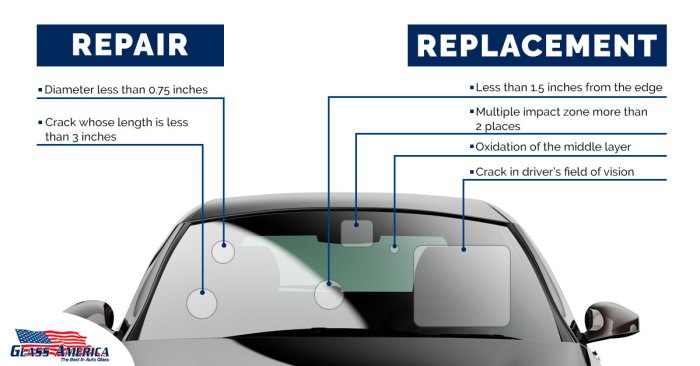
When it comes to deciding between repairing or replacing a damaged windshield, there are certain situations where a repair may not be sufficient. It is important to consider these factors to ensure the safety and integrity of your vehicle.
When Repair is Not Enough
- Cracks longer than 12 inches or chips larger than a quarter may not be effectively repaired and could compromise the structural integrity of the windshield.
- Damage located directly in the driver's line of sight may hinder visibility even after repair, posing a safety risk.
- Multiple or extensive cracks that intersect or cover a large area may not be suitable for repair and could worsen over time.
Importance of Timely Replacement
When a windshield is damaged beyond repair, it is crucial to replace it in a timely manner to prevent further issues. Delaying replacement can lead to:
- Increased risk of the damage spreading and becoming irreparable, requiring a more expensive replacement.
- Compromised structural integrity of the vehicle, putting occupants at risk in the event of an accident.
- Legal consequences, as driving with a severely damaged windshield may result in fines or citations.
Cost Comparison
When weighing the costs of repair versus replacement, it is essential to consider the long-term benefits and potential savings. While repair may seem like a more cost-effective option initially, factors such as:
- The extent of the damage
- The type of vehicle
- Your insurance coverage
should be taken into account. In some cases, replacing the windshield may be a more practical and economical choice in the long run.
Maintenance Tips
Regular maintenance of your windshield is crucial in ensuring its longevity and preventing costly repairs or replacements. By following some best practices, you can take care of your windshield and avoid potential damage that may compromise your safety on the road.
Regular Cleaning and Inspection
- Regularly clean your windshield both inside and outside to remove dirt, grime, and debris that can cause scratches and reduce visibility.
- Inspect your windshield for any chips, cracks, or pits, and address them promptly to prevent further damage.
- Check your windshield wipers regularly for any signs of wear and tear, as damaged wipers can cause scratches on the glass.
Avoid Extreme Temperatures
- Avoid exposing your windshield to extreme temperatures, as sudden changes in temperature can cause the glass to expand or contract, leading to cracks or chips.
- During winter, do not pour hot water on a frozen windshield, as the sudden temperature change can cause the glass to crack.
- Park your car in shaded areas whenever possible to minimize exposure to direct sunlight, which can weaken the glass over time.
Seeking Professional Advice
- If you notice any significant damage to your windshield, such as large cracks or deep pits, it is advisable to seek professional advice from a qualified auto glass technician.
- Professional maintenance services can help identify and address minor issues before they escalate into major problems, saving you time and money in the long run.
- Consider scheduling regular check-ups with a professional to ensure that your windshield is in optimal condition and to address any potential issues promptly.
Closure
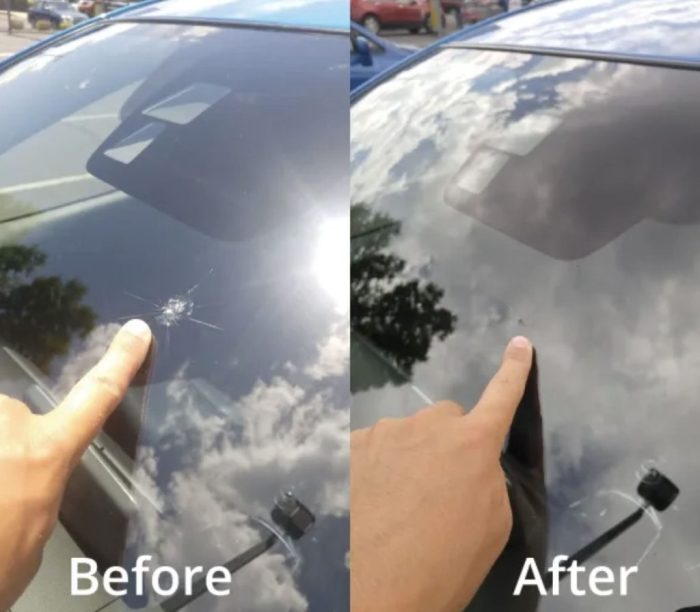
In conclusion, understanding the nuances of when to replace versus repair a damaged windshield is essential for every vehicle owner. By following the guidelines Artikeld in this discussion, individuals can make informed decisions to ensure the safety and longevity of their windshields.
Question & Answer Hub
When should I opt for windshield replacement instead of repair?
If the damage is extensive, such as a large crack or multiple chips, replacement is usually recommended for safety reasons.
Can I repair a windshield on my own?
While DIY kits are available, it's advisable to seek professional help for a quality repair that ensures the structural integrity of the windshield.
How often should I seek professional advice for windshield maintenance?
Regular inspections and maintenance by professionals are recommended at least once a year to detect any potential issues early.